
What Texas Boaters Need to Know Before Getting on the Water This Summer
Most people associate drunk driving charges with cars and trucks. But Texas law reaches considerably further than the highway, and if you're operating a personal watercraft like a Jet Ski while intoxicated on any Texas lake, river, or coastal waterway, you can be arrested, charged, and convicted under the same legal framework that governs DWI. The consequences are just as serious, and the process that follows is just as unforgiving.
If you've been arrested for boating while intoxicated in Texas or anywhere in the Houston area, attorney Amanda Webb has been defending clients against DWI and BWI charges in Montgomery County and the surrounding region since 2009. Being charged does not mean you are guilty, and the right defense can make all the difference in how this case ends.
What Texas Law Actually Says About BWI
Texas Penal Code Section 49.06 defines Boating While Intoxicated as operating a watercraft in a public place while intoxicated. The definition of "watercraft" under Texas law is broad, covering motorboats, sailboats, vessels with motors, and — critically — personal watercraft. A Jet Ski, WaveRunner, Sea-Doo, or any other motorized personal watercraft falls squarely within the statutory definition.
The definition of intoxication is the same as it is for DWI: a blood alcohol concentration of 0.08 or higher, or not having the normal use of your mental or physical faculties due to the introduction of alcohol, a controlled substance, a drug, a dangerous drug, or a combination of any of these substances. You can be charged with BWI even if your BAC is below 0.08 if an officer believes impairment has affected your normal faculties.
Unlike a car on a public road, a Jet Ski on a Texas lake doesn't require the operator to be licensed or registered as a driver. But it does require the operator to follow Texas water safety laws, and operating one while intoxicated in a public waterway is a criminal offense.
BWI Penalties Mirror DWI Penalties in Texas
A first BWI offense in Texas is a Class B misdemeanor, carrying:
- A fine of up to $2,000
- Between 72 hours and 180 days in county jail
- Loss of your driver's license for up to one year
A second BWI offense becomes a Class A misdemeanor with increased fines, mandatory minimum jail time, and longer license suspension periods. A third offense is a third-degree felony. If the BWI incident results in serious bodily injury to another person, the charge escalates to intoxication assault, and if it results in death, intoxication manslaughter, both of which are felonies with serious prison exposure.
Beyond the criminal penalties, a BWI conviction carries many of the same collateral consequences as a DWI: higher insurance rates, difficulty renting vehicles, potential employment impacts, and a permanent criminal record that can affect professional licensing in some fields.
How BWI Stops and Investigations Work on the Water
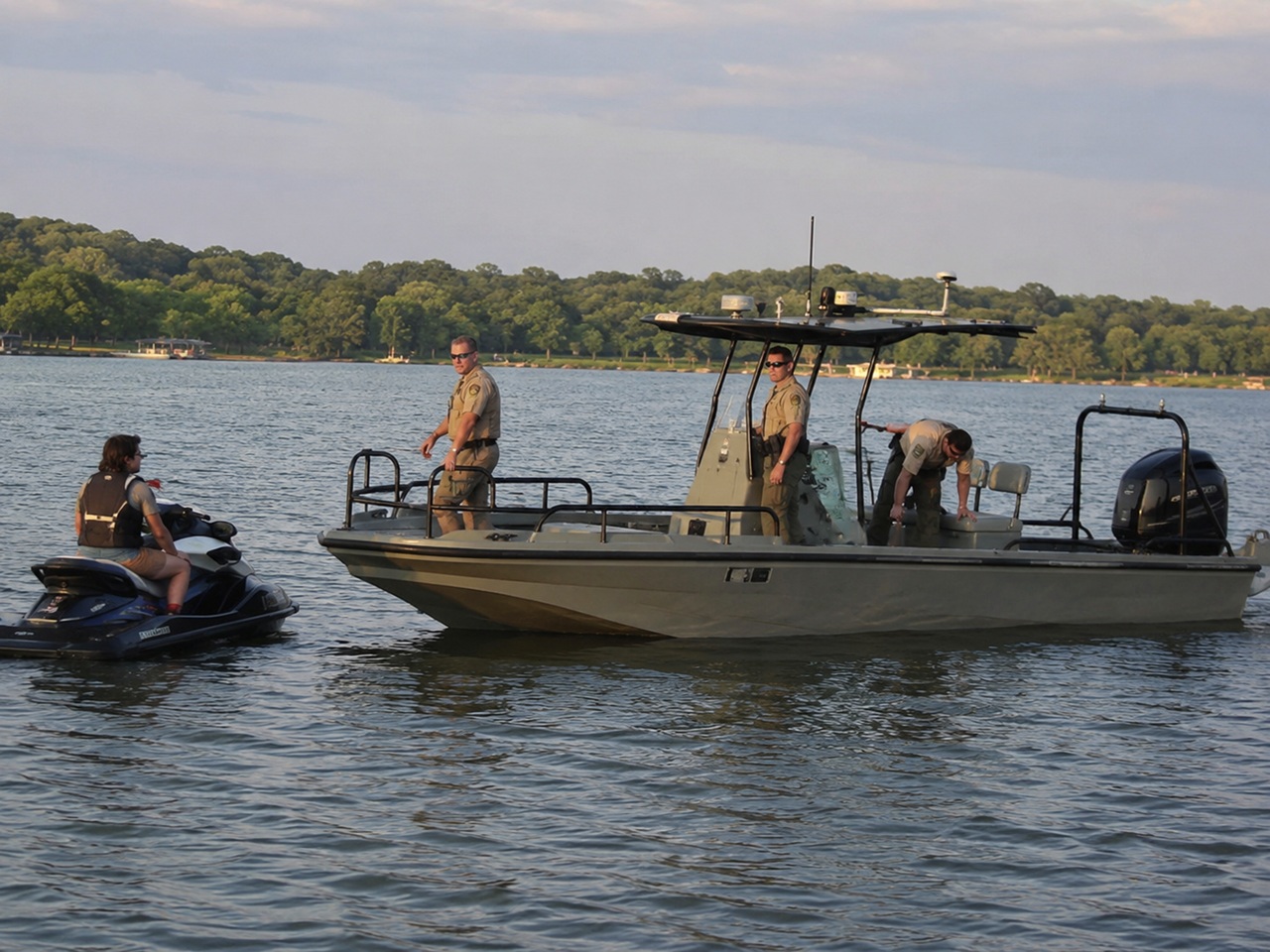
Texas Game Wardens, Texas Parks and Wildlife Department officers, and local law enforcement all have the authority to stop and investigate watercraft operators they suspect of being intoxicated. The standard for a stop on the water is reasonable suspicion, the same as on the road, but what constitutes reasonable suspicion in a BWI context can include erratic or dangerous operation of the watercraft, near-collisions with other vessels or swimmers, speeding in restricted areas, or an officer's observation of open containers and visible signs of impairment on the boat.
Once stopped, the investigation typically mirrors a roadside DWI stop. An officer may ask the operator to perform field sobriety tests adapted for the watercraft environment. It's worth noting that the standardized field sobriety tests used in land-based DWI investigations were developed and validated for people standing on solid ground. On a boat or after a period on the water, balance and coordination can be affected by factors that have nothing to do with alcohol, including wave motion, sun exposure, dehydration, and fatigue. These environmental effects are collectively referred to in the research literature as the marine environment effect, and they are a meaningful defense consideration in BWI cases.
An officer may also request a breath or blood test. Texas's implied consent law applies to watercraft operators just as it does to drivers, which means that operating a watercraft on Texas waters carries implied consent to testing. Refusing a breath or blood test can result in license suspension and may be used against you in court, but refusal does not automatically mean a conviction, and the decision of whether to submit to testing has significant legal implications worth discussing with an attorney as early as possible.
The Defenses Available in a Texas BWI Case
A BWI charge is a serious matter, but it is not automatically a conviction, and there are legitimate defenses that an experienced attorney can raise. Some of the most significant include:
- The Marine Environment Effect: As noted above, balance impairment, slowed reaction time, and other signs that officers use to evaluate intoxication on land can be caused or exacerbated by time spent on the water, even without any alcohol consumption. An attorney familiar with BWI defense knows how to challenge the reliability of field sobriety observations made in this context.
- Improper Stop or Investigation: If the officer lacked reasonable suspicion to stop the watercraft, or if the investigation that followed failed to comply with required procedures, evidence obtained as a result of that stop may be suppressible. Mistakes police make in DWI and BWI investigations are a meaningful source of defense in many cases.
- Breath Test Reliability: Breath testing instruments require proper maintenance, calibration, and operator certification. If the device used in your case had documentation problems or the test was administered improperly, the results can be challenged.
- Blood Test Chain of Custody: Blood draw results can be contested on the basis of how the sample was drawn, handled, stored, and analyzed. Contamination, improper handling, or laboratory error can all affect the validity of a blood test result.
What to Do After a BWI Arrest in Texas
The period immediately after an arrest is when the most consequential decisions get made, and many of the mistakes drivers make in DWI situations apply equally here. Don't discuss the details of the incident with officers beyond what is legally required. Don't post about the arrest or what happened on social media. And contact an attorney before you make any decisions about how to respond to the charge.
One of the most time-sensitive issues after a BWI arrest involving a breath or blood test refusal, or a test result above the legal limit, is the administrative license revocation process. There are strict deadlines for requesting a hearing to contest license suspension, and missing those deadlines can result in automatic suspension. Attorney Webb knows how to navigate ALR hearings and protect your driving privileges while the criminal case proceeds.
Facing a BWI Charge in the Houston Area? Fight It.
One of the most common and costly mistakes people make after a BWI arrest is assuming the case is lost and pleading guilty without exploring every defense available. Attorney Amanda Webb has been fighting DWI and BWI charges in Montgomery County, Harris County, and the surrounding Houston area since 2009, and she knows that a charge is not a conviction. Contact us today for a free case evaluation. Attorney Webb is available 24 hours a day, seven days a week.
"Amanda was an outstanding criminal defense attorney. She was very professional, knowledgeable, and fought tirelessly on my behalf, which helped greatly." — Tyler G., ⭐⭐⭐⭐⭐